Hello.
Letters to Me is a collection of moments for the person I’ll become.
I started recording observations, photographs, conversations and places because I realized memories change faster than life does.
Every letter includes the place, the walk, the conversation, the photographs and whatever caught my attention that day.
Sign up to receive updates via email.
Thank you!
With a few fingers and toes crossed, you landed here after signing up.
You will now receive the next email update.
Thank you again for signing up. It means a lot.
A guide.
Stuff
How it all started →
2026
Jan → Feb → Mar → Apr → May → Jun →
Jul → Aug → Sep → Oct → Nov → Dec →
How it all started.
- Date
- Route
- Observation
- Photos
- Audio
- Video
- Reflection
- Future note (what i want remembered - how i feel / think)
Tuesday: June 30, 2026.

Location: New York, Central Park
Photo: The heat. My god the heat.
Talking to myself: Likely my last conversation about pricing (assuming the algorithms stay sane). In this case an example from T-Mobile of how not to communicate price increases. (And an example of Apple's price increases giving others the room to message their own price increases.)
Commentary: The heat is coming. I think the France v. Sweden game is at 5pm in
New YorkNew Jersey today.Key takeaway: Poor messaging is lazy.

Monday: June 29, 2026.

Location: New York, Central Park
Photo: Treats.
Talking to myself: A continuing conversation with myself about pricing, in this case pulling from this story about Bernie Sanders.
Commentary: I've been trying to take this photo for weeks. It's taken so long since he's not there in the early mornings when I'm regularly walking. The colors!
Key takeaway: Consistency is tough.
Sunday: June 28, 2026.

Location: New York, The Reservoir
Photo: Light.
Talking to myself: From yesterday's (since-deleted) audio, we're seeing some of the immediate impacts to Apple's pricing announcement already with Microsoft announcing price increases on its consoles.
Commentary: When sharing photos from my digital camera, I normally apply to filters. I really like to brighten the photo as much as possible without losing contrast or over/under exposing the focal point. In this image, I didn't do anything. No filters, no edits, nothing. And it might be one of my favorite photos I've ever taken.
Key takeaway: Doing nothing is still making a decision.
Saturday: June 27, 2026.

Location: New York, Hudson River
Photo: Big things need small things, too.
Talking to myself: In a since-deleted audio recording, I focused on margins. Specifically the challenge Apple has with its recent announcement of price increases, and the impact those price increases will have on the consumer electronics industry and the economy.
Commentary: I'm not a big fan of the water, generally (even though I'm a Pisces), however the Hudson River amazes me every time I see it. Rivers, throughout history, are such a central part of our growth and hold so many different and compelling stories.
Key takeaway: Protect your margins.
Daily observations.
June 1, 2026.
Observation: AI.
Why? I'm generally fascinated on how much money is going into AI as infrastructure with little or no revenue tied to its costs.
Since when? Probably since the beginning of computers.
What does it mean? There is a lot of money being spent on betting for the future versus empower today's culture. Reminds me of why the Rams traded for Myles Garrett from the Browns - they don't care about the possibility of a draft pick maybe doing well. (I think that's the right approach.) (Go Browns.)
June 2, 2026.
Observation: Ornaments on tops of buildings appear more frequently on Central Park West Avenue than they do on Broadway.
Why? I'm guessing it has to do with the concentration of money.
Since when? Since these older buildings were built.
What does it mean? Money and wealth has always driven our culture.

June 3, 2026.
Observation: Leadership changes people.
Why? Thinking about the Bari Weiss > Nick Bilton > Scott Pelley news.
Since when? Companies focused on making gobs of money for their investors (not their customers or clients, necessarily).
What does it mean? When an organizations installs new leadership or management, change is coming and not everyone currently employed in or anyone who supports that organization will agree with that change. However, with new leadership, change is coming.
Here's a photo I took on this morning's walk around Central Park and through the Upper West Side of Manhattan.

June 4, 2026.
Observation: Jalen Brunson wins basketball games.
Why? Watched first game of NBA Finals last night.
Since when? 12-game playoff winning run.
What does it mean? I heard this on the Knicks Film School podcast this morning. It's succinct, impactful and true.
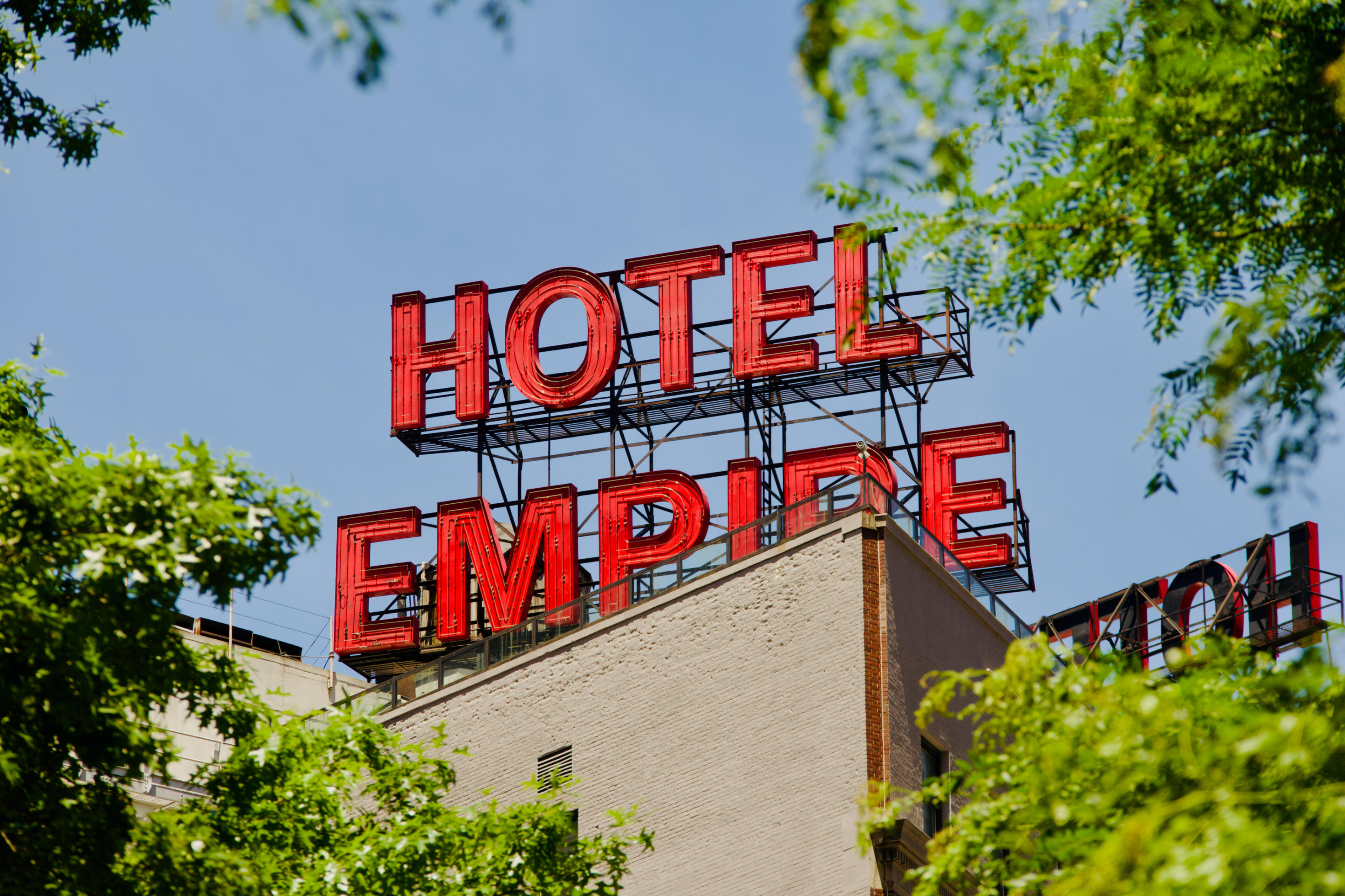
I skipped the morning walk today, opting to walk to midtown at 12:30. Here's a photo from that walk.
Tell me something good...
I'm not active...
... on any social media channels, even though I likely have accounts on nearly every social media app.
Contact me...
Email: [email protected]
Text: 347-694-5202
Bluesky: @wiljr.xyz
I respond to all messages.
My articles...
... are archived below. To (hopefully) easily find a specific article, I've created a link table organized by year + month + title + description + status.
Article link table
| YEAR | MONTH | TITLE | DESCRIPTION | STATUS |
|---|---|---|---|---|
| 2026 | June | Hello, Brooklyn. | Brooklyn v. New York. | Draft |
| 2026 | May | The Caveman. The Robot. The Optimist. | A model for understanding how organizations adapt, break and evolve. | Published |
| 2026 | — | The amplification of AI. | Showcasing what we do well and what we don't do well. | An idea. |
| 2026 | — | The Polymath. The Moderate. The Optimist. | Understanding how individuals can be successful from the middle. | An idea. |
all the articles → all the things → get updates by email →
This is a draft. Emailed article coming in June 2026.
Hello, Brooklyn.
Brooklyn v. New York.
It probably says a lot about what I know of Brooklyn when the photo I'm using to capture Brooklyn is not actually of Brooklyn.
Rather it's a photo of Manhattan New York from Brooklyn.

all the articles → all the things → get updates by email →
May 2026.
The Caveman.
The Robot.
The Optimist.
A model for understanding how organizations adapt, break and evolve.
Most organizations do not stall because they lack intelligence, resources or strategy. They stall because they are operating multiple conflicting systems of thinking at the same time.When systems change (whether driven by technology, market pressure or internal ambition) organizations (and individuals) tend to cycle through three modes of interpretation:
The Caveman.
The Robot.
The Optimist.
No one mode is bad.Rather, when all three modes are operating in tandem, focused on the same outcome, with no clear decision maker, progress stalls.Don’t think of these as personality types.They are operating modes of decision-making under transition.
The Caveman.
The logic of continuity.The Caveman represents legacy thinking. It is the instinct to preserve what has worked before.Core beliefs.
“This is how we’ve always done it.”
“Prove this new approach is better than the old one.”
“We should minimize risk, not maximize change.”
Strengths.
Protects stability.
Prevents unnecessary disruption.
Preserves institutional memory.
Failure mode.
Failure mode.
The Caveman becomes dangerous when the environment has already changed. When new systems emerge, Caveman thinking:
Overvalues precedent.
Underestimates structural change.
Treats new constraints as temporary anomalies.
In transition moments, Caveman thinking is not wrong.It is simply incomplete.
The Robot.
The logic of optimization.The Robot represents systems-thinking applied without context.
It is the instinct to rebuild everything in a more efficient, scalable or automated way.Core beliefs.
“This can be optimized.”
“We should rebuild this properly.”
“Technology should replace manual process.”
Strengths.
Creates scale.
Introduces repeatability, efficiency and structure.
Removes chaos.
Failure mode.The Robot becomes dangerous when optimization replaces understanding. In transition moments, Robot thinking:
Over-engineers systems before they are understood.
Assumes process will replace judgment.
Confuses instrumentation with clarity.
The Robot builds systems that are internally elegant yet externally misaligned.
The Optimist.
The logic of motion.The Optimist represents forward-looking judgment.It is the instinct that movement, decisions and iterations equates to progress (despite uncertainty).Core beliefs.
“We can make this work."
“Progress matters more than perfection."
“We will learn by doing.”
Strengths.
Creates momentum.
Turns uncertainty into action.
Focuses on outcomes.
Failure mode.
The Optimist becomes dangerous when movement replaces structure.
In transition moments, Optimist thinking:
Ignores systemic constraints.
Over-relies on human judgment without scaffolding.
Assumes execution will resolve ambiguity.
The Optimist creates activity without alignment.
Why organizations stall.
Most organizational breakdowns aren't caused by just one mode. They are caused by misalignment between all three modes at once.For example:
The Caveman insists on legacy sales motion.
The Robot builds CRM complexity and automation layers.
The Optimist pushes for growth without structural clarity.
The result is predictable:
Progress stalls.
Execution slows.
Thinking becomes fragmented.
Not because the organization lacks capability.Because it lacks a unified operating model for change.
The core insight.
Transition, not tools, determines outcomes. The key misunderstanding in most organizations is the belief that failure is caused by:
Bad process.
Weak talent.
Insufficient tools.
In reality, failure usually occurs during transitions between modes of thinking.
From Caveman → Robot: Legacy systems are digitalized too early.
From Robot → Optimist: Systems are deployed without user clarity.
From Optimist → Caveman: Execution fatigue leads to regression.
Each transition introduces friction, yet most organizations never explicitly manage that friction.
Practical application.
Diagnosing system breakdowns.This model can be used to diagnose any organizational breakdown, particularly in revenue systems.If you see Caveman dominance:
Sales cycles rely on outdated assumptions.
Legacy objections override new market signals.
“We’ve always sold this way” determines outcomes.
If you see Robot dominance:
Sales process is over-instrumented.
CRM complexity replaces decision clarity.
Automation replaces human judgment too early.
If you see Optimist dominance:
Deals move without structure.
Follow-up is inconsistent.
Momentum exists without closure discipline.
Why this matters.
Modern business environments, especially B2B companies navigating growth, do not fail from lack of effort.They fail from mode-confusion under transition pressure.The Caveman, The Robot, The Optimist framework provides a way to:
Identify which mode is dominant.
Understand where breakdown occurs.
Rebalance toward execution clarity.
The underlying principle.
All organizations cycle through three forces:
Preservation (The Caveman)
Optimization (The Robot)
Movement (The Optimist)
Success is not choosing one.Rather, success is sequencing them correctly based on the stage of the system.
All the things...
The author
I’m a business and communications leader with a BS in Business Computer Telecommunications and an MBA in Marketing, and over three decades of experience in technology, operations and leadership.I’ve also lived through transformations few people prepare for—from a kidney transplant to relocating across states and industries and working in remote locations from Montana to Zurich.I launched Letters to Me—a website, newsletter and podcast—to reflect on building a meaningful life in a noisy world.
Signing up
When you sign up, you are opting in to receive weekly emails from Letters to Me to the email address provided within the submitted form. I won't use your info for any other purpose than sending you emails.By the way, I am also not using any kind of email service provider or analytics. Generally, I have a thought, I'll take a photo (or photos) to capture some context, then I'll write up those thoughts and send them to you.Instead of analytics, I hope you'll reply to those emails with your own thoughts.
Articles
My articles, which I normally send once during the week, are normally less than 500 words, focused on the power of simplicity, the long-term power of the Lindy Effect and the writings of Michel de Montaigne.Articles are available by email (sign up here).Sent articles are here.
Ethics
Letters to Me is an independent project supported by its readers. I strive to maintain the highest standard of professional ethics:
When I make a mistake, I strive to correct the error promptly and disclose the correction.
I maintain the anonymity of any source when asked to do so.
I do not, and would never, accept payment to write about any company on Letters to Me.
I may run ads in free articles and podcast episodes. Companies I cover are not eligible to advertise, and sponsors have no editorial control what I write about.
I will disclose whenever I use artificial intelligence (AI) for my articles, linking to the specific AI tool when that tool was used for my articles, pages and podcast.
I welcome comments on my ethics statement and how it might be improved. Please contact me with any recommendations. Note: I used The Platformer Ethics page as an example for the above ethics language.
Style
Typeface: Anonymous Pro (headlines); Work Sans (paragraphs)
Main color, Calm Dark Green: Hex #1C3D28
Accent color, Off-White (Ivory): Hex #FAFAF7
Accent color, Soft Beige: Hex #D6CDBA
Accent color, Charcoal: Hex #2D2D2D
Accent color, Muted gold: Hex #C2A77D
Stuff
I'm not active on social media.
This site is built and hosted by Carrd.co.
Domain is hosted by Cloudflare.
All payment processing is securely handled by Stripe, Inc..
All invoicing managed by my company. The New Communicate, LLC.
Updated: May 31, 2026.